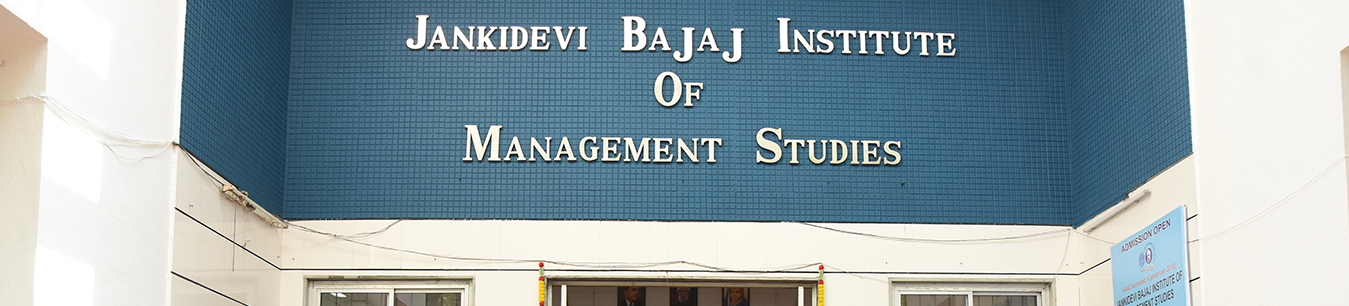
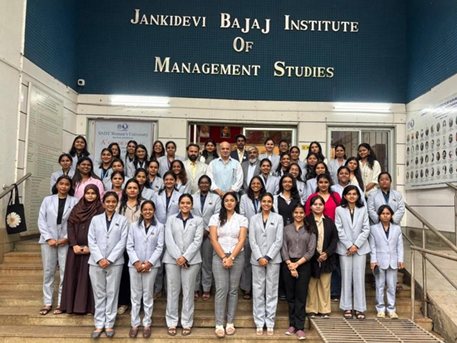
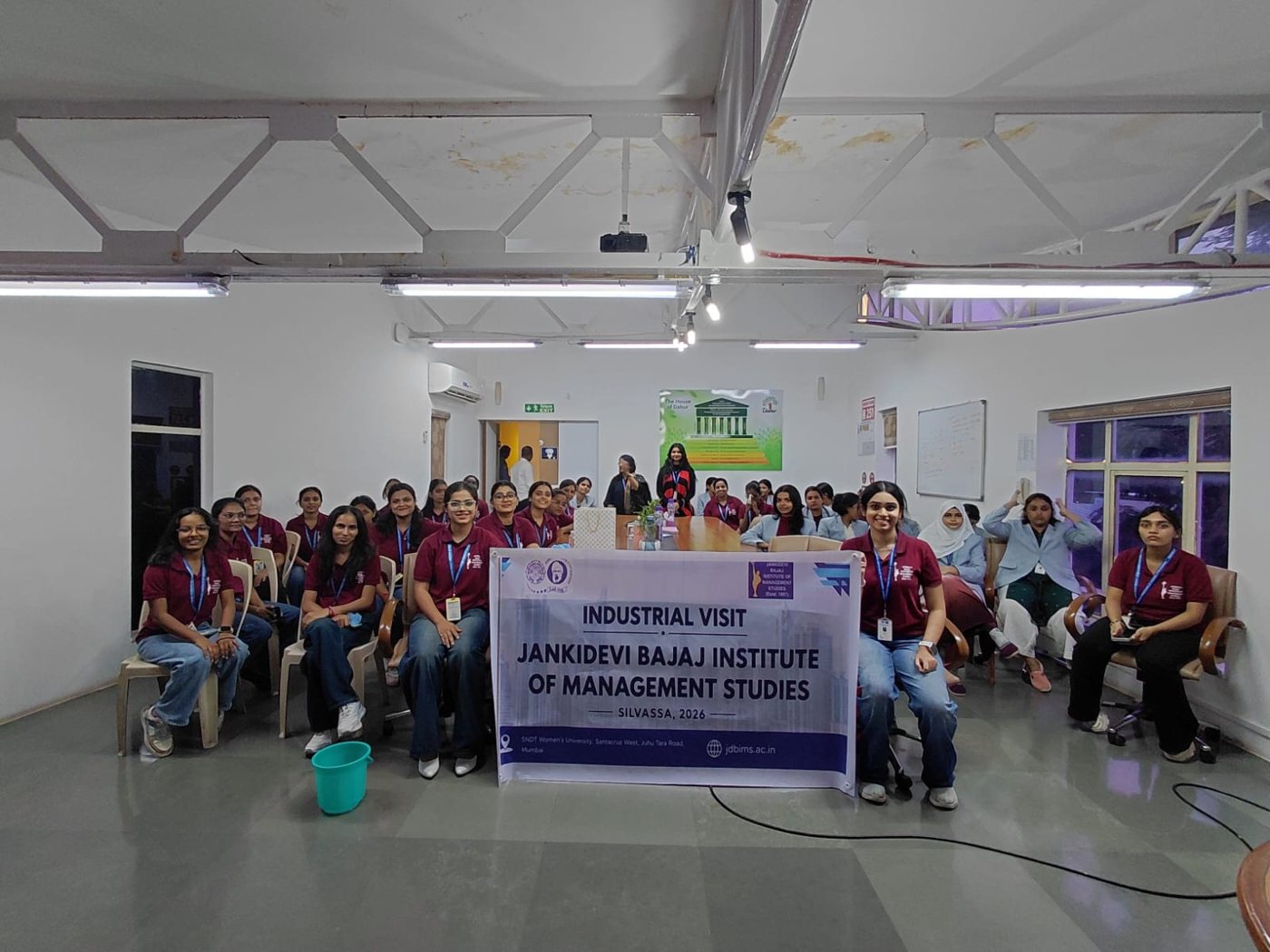
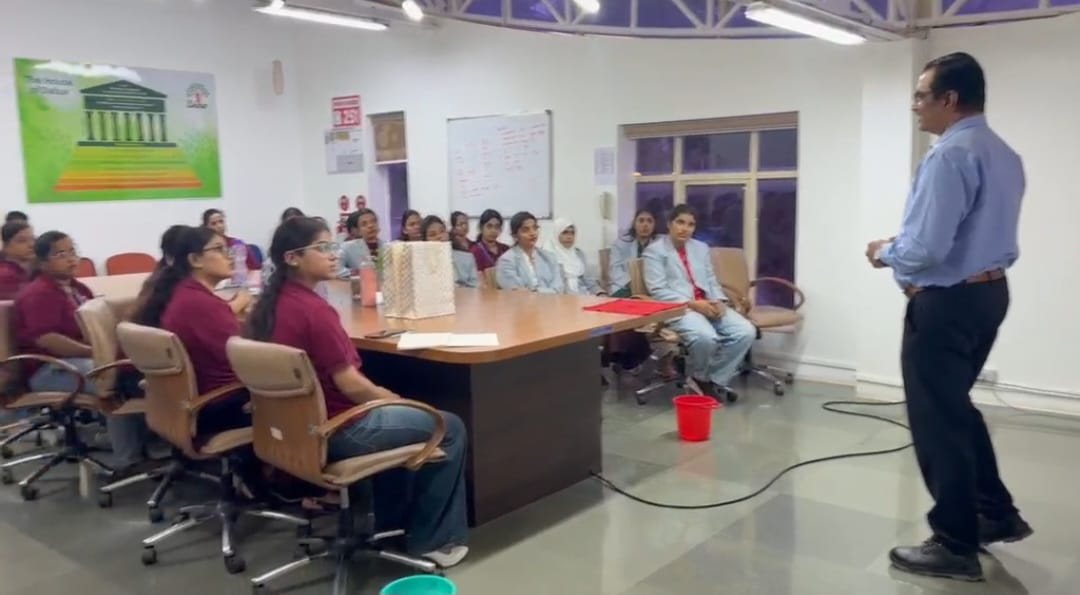
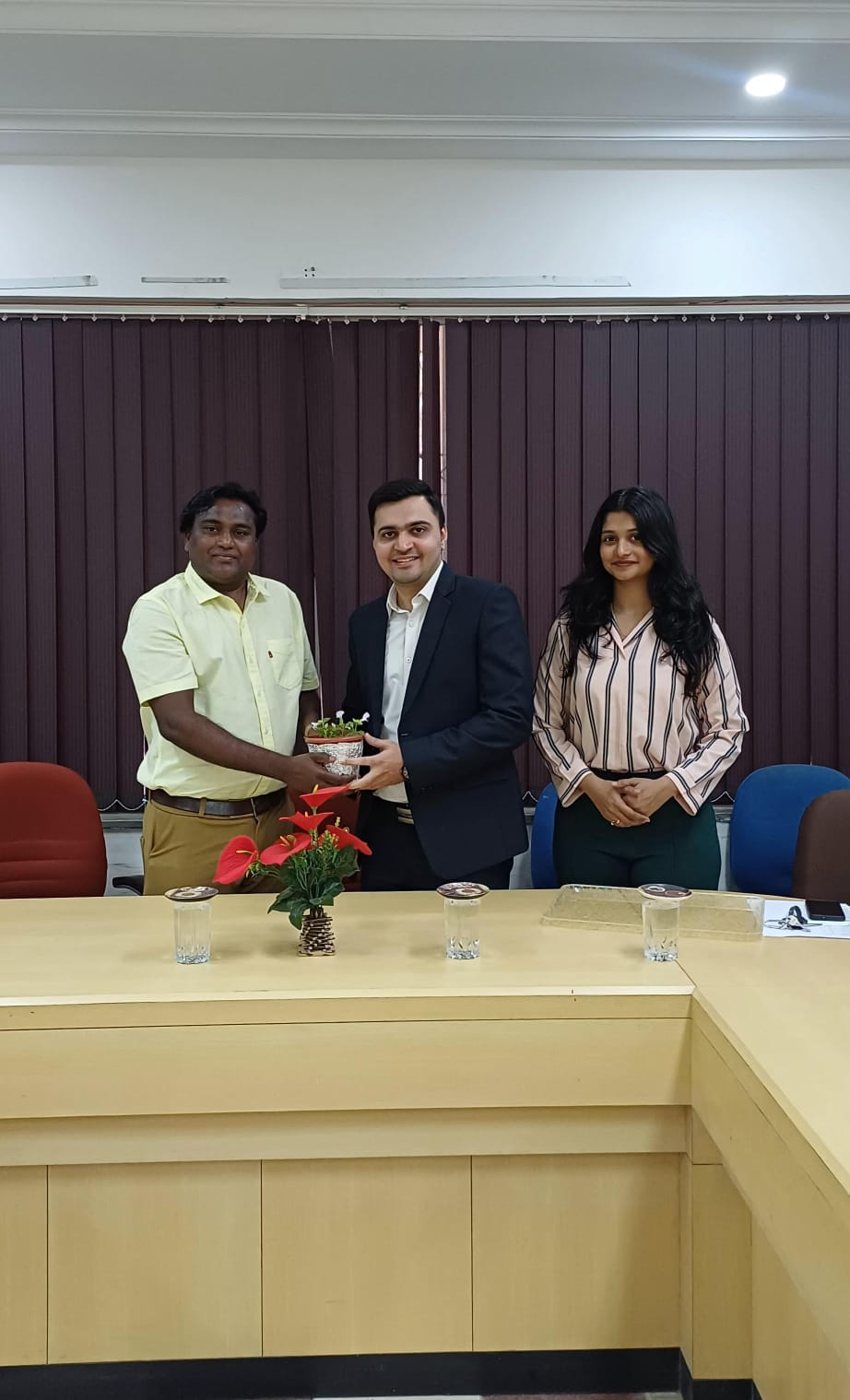
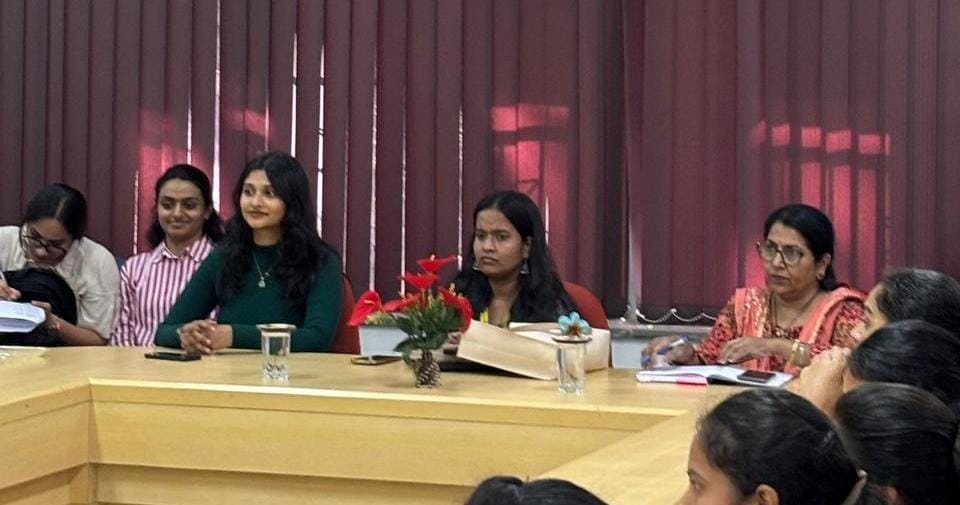
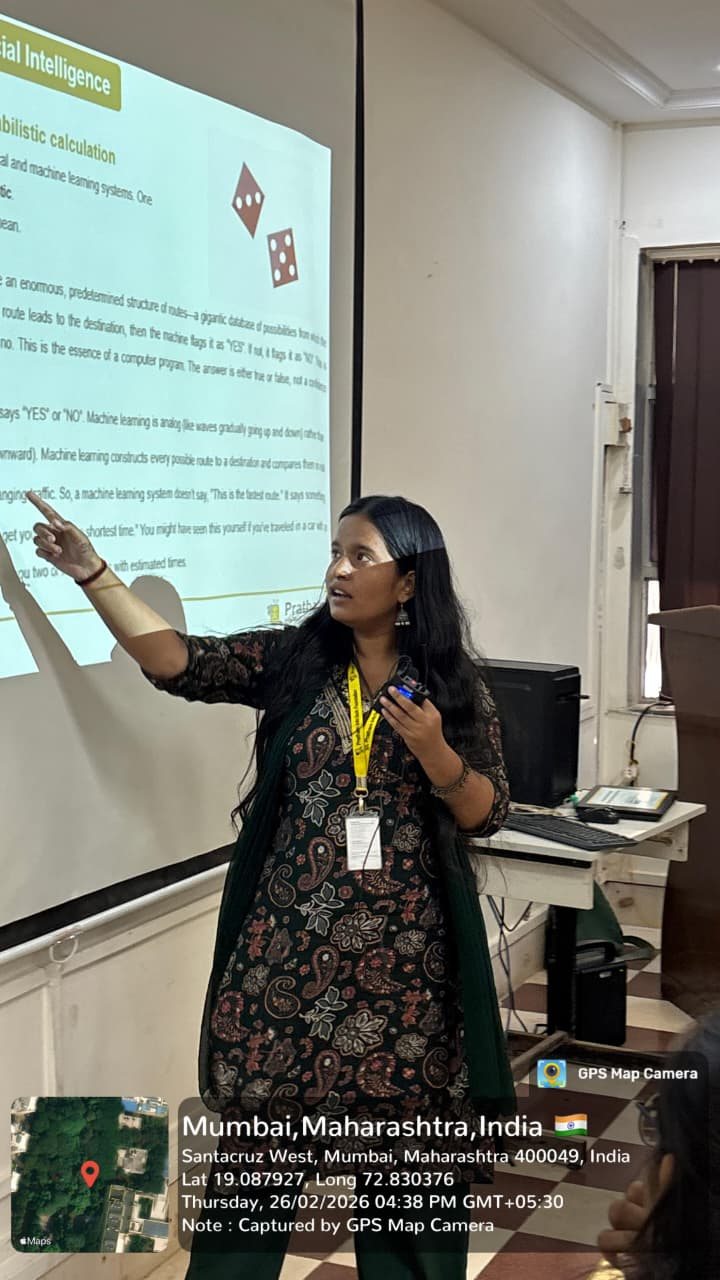
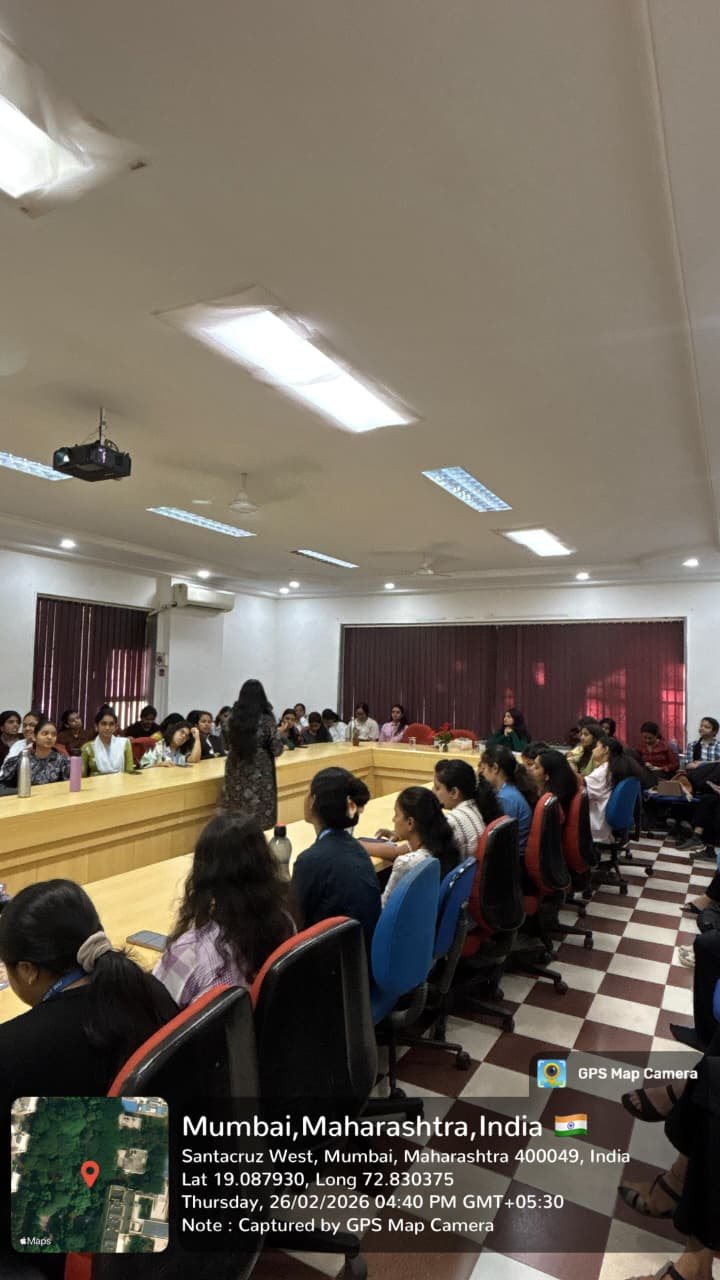
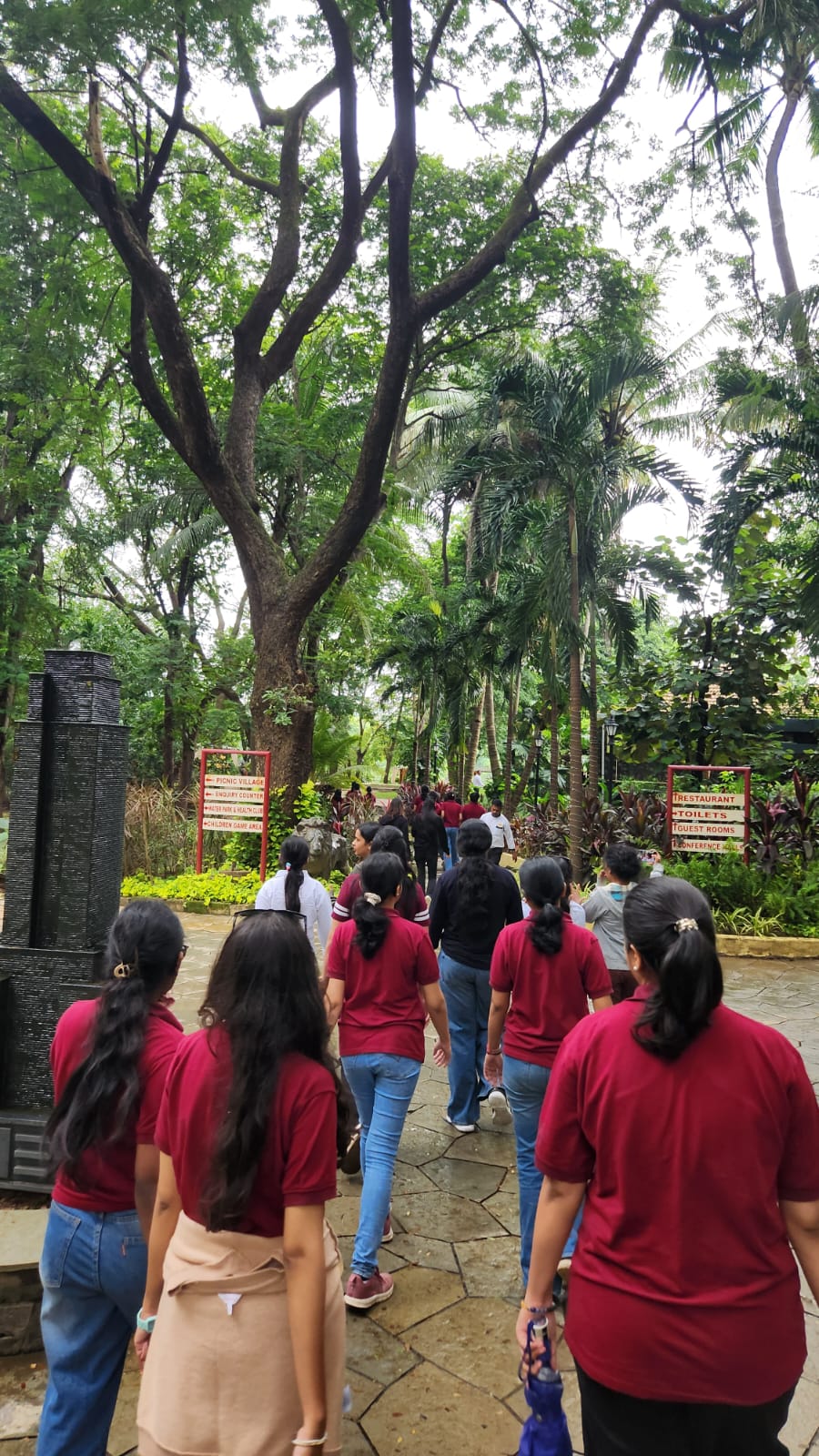
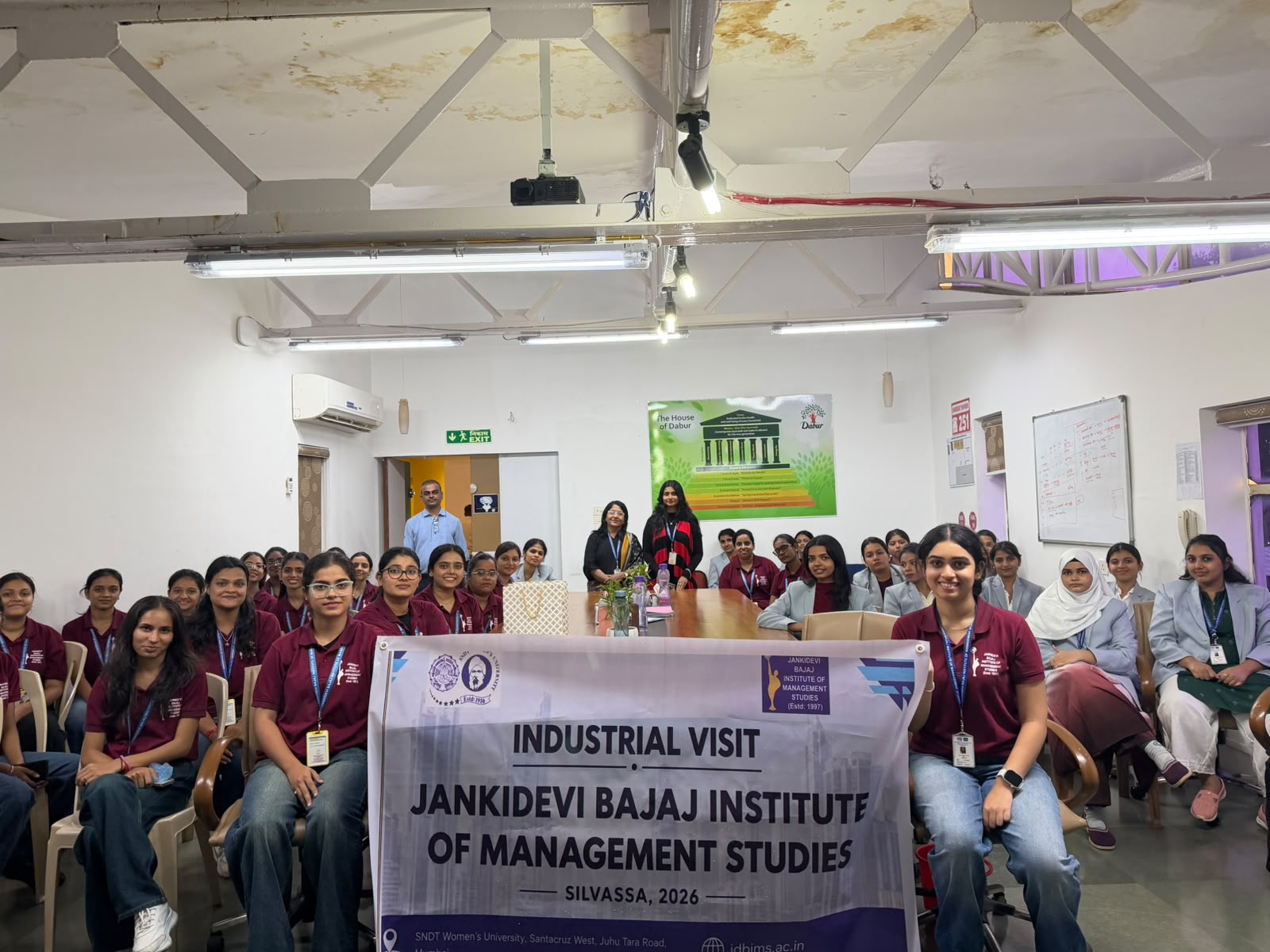
Jankidevi Bajaj Institute of Management Studies organised an Industrial Visit to Silvassa on 11th August 2026 for 33 students from the Finance, Human Resources and Marketing specialisations. The visit was planned as an experiential learning activity to provide students with an opportunity to observe industrial operations and understand how management concepts are implemented in real-world organisations.
The visit covered two different manufacturing organisations, Dabur India Limited and Filatext, allowing students to experience two distinct industrial environments. While Dabur provided exposure to consumer-products manufacturing, Filatext offered insights into thread and textile manufacturing. The visit helped students understand the role of people, processes, technology, materials, quality and coordination in industrial operations.
Objectives of the Visit
The industrial visit was organised with the following objectives:
- To bridge the gap between theoretical learning and practical industrial experience.
- To provide students with first-hand exposure to the working environment of manufacturing organisations.
- To understand the various stages involved in production, processing, packaging, storage and dispatch.
- To observe how machinery, technology, materials and human resources are integrated into industrial operations.
- To understand the importance of quality control, standardisation and consistency in manufacturing.
- To gain awareness of workplace safety, employee discipline and standard operating procedures.
- To understand the importance of employee training, teamwork, communication and coordination in achieving organisational efficiency.
- To help Finance students understand the role of capital investment, operating costs, inventory and efficient resource utilisation in manufacturing.
- To help HR students understand employee responsibilities, training, safety, teamwork and workforce management in an industrial setting.
- To help Marketing students understand the relationship between product quality, packaging, customer expectations, presentation and brand value.
- To understand the importance of material quality and organised material handling in maintaining smooth production processes.
- To provide students with an understanding of cross-functional coordination between departments such as Production, Quality, HR, Finance, Marketing, Maintenance and Stores.
- To encourage students to develop professional awareness, workplace discipline, teamwork and problem-solving skills.
- To enable students to relate their respective areas of specialisation to actual organisational practices and decision-making.
- To provide students with a broader understanding of how people, processes, technology, quality and resources work together to achieve organisational objectives.
Visit to Dabur India Limited
Consumer Products Manufacturing
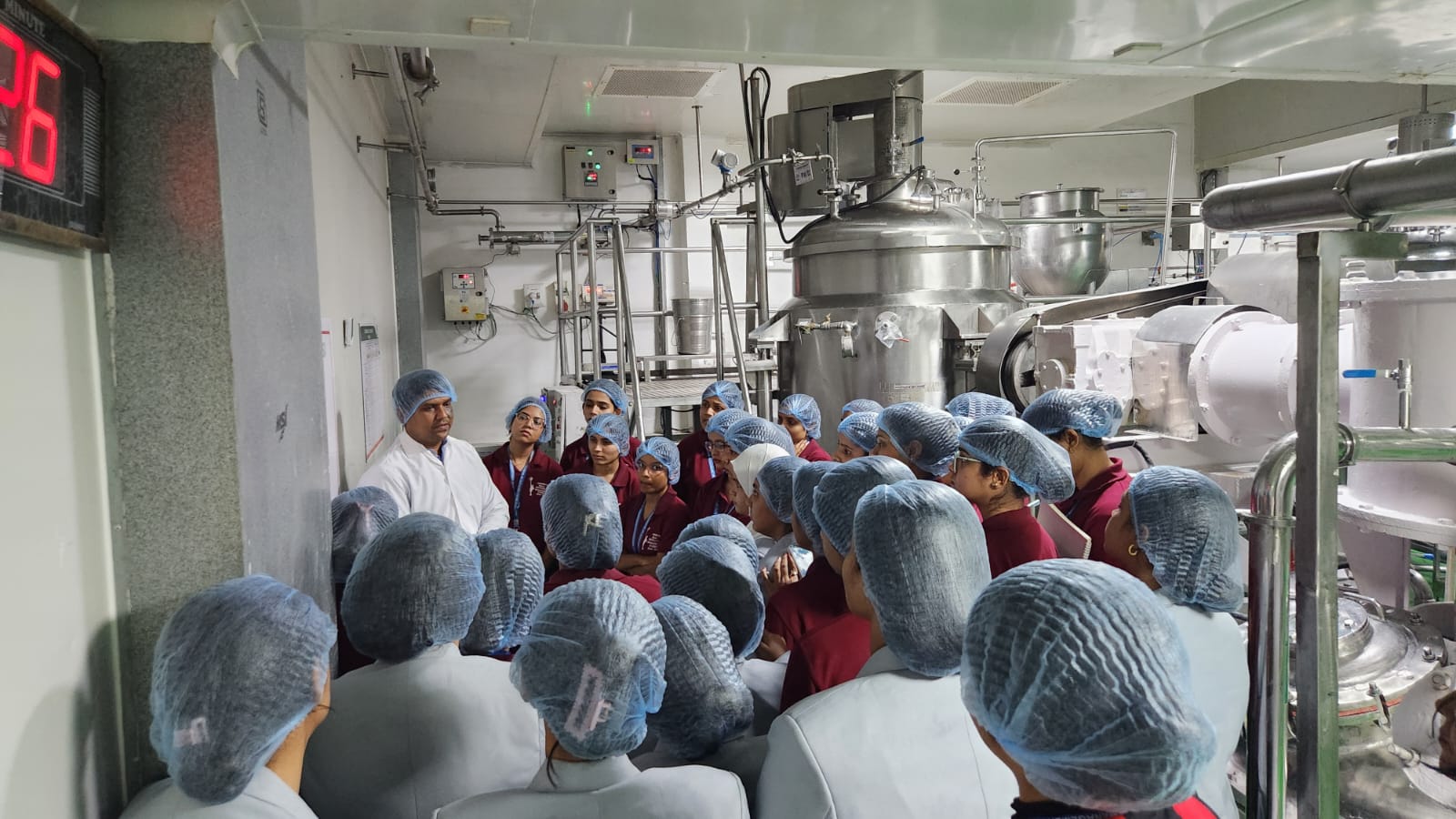
The first part of the industrial visit was to Dabur India Limited, Silvassa, which provided students with an opportunity to observe a structured consumer-products manufacturing environment. The visit helped students understand how materials, machinery, employees and quality systems are coordinated to support efficient and consistent production.
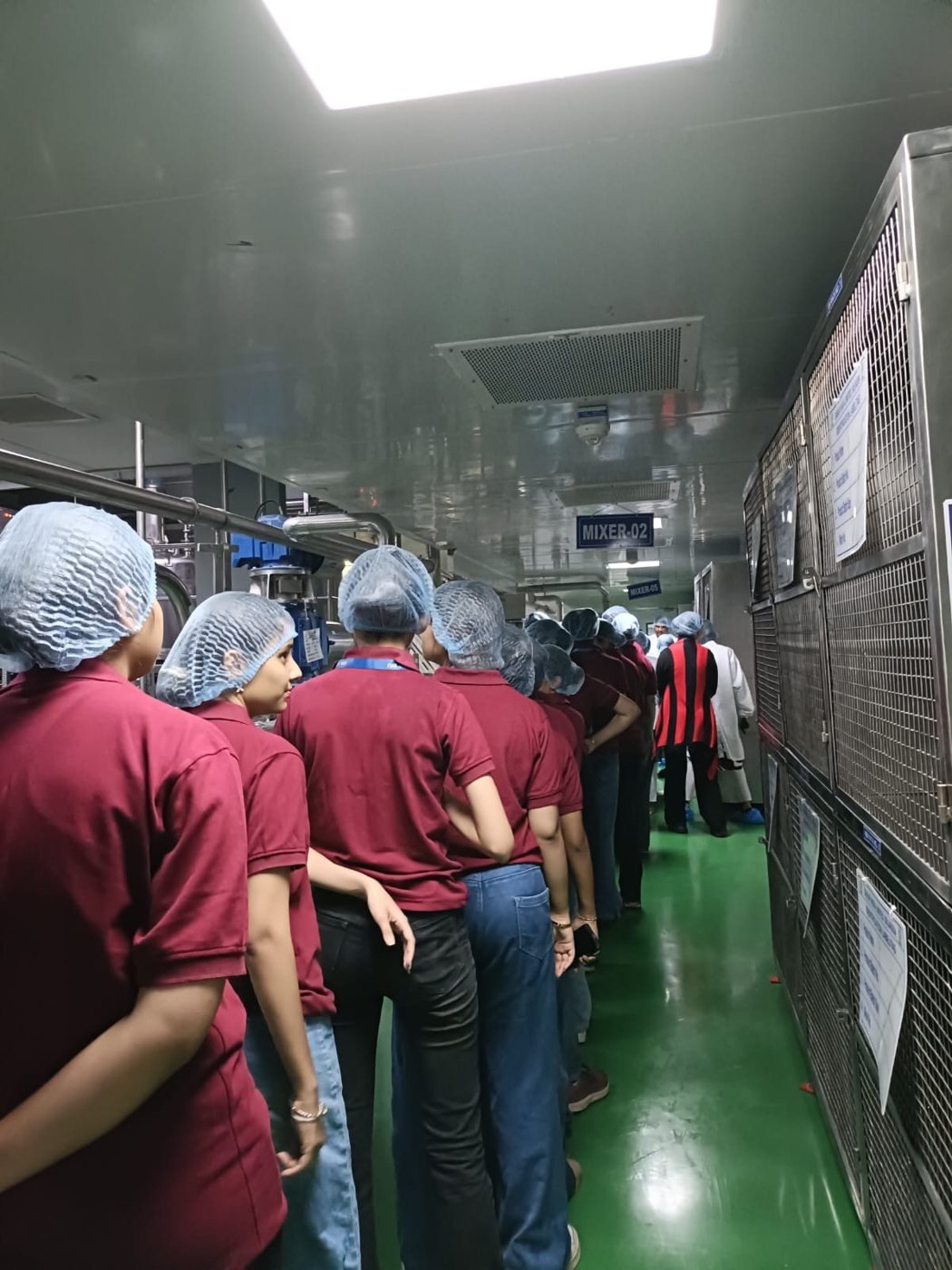
During the visit, students were introduced to various aspects of the manufacturing setup, including production equipment, tanks, mixers, pipelines, material movement and organised production areas. They were able to observe how different stages of the manufacturing process are systematically managed to ensure smooth operations and maintain the required quality standards.
The students gained an understanding of the broad production flow, beginning with the receipt and checking of raw materials, followed by preparation and controlled processing. Depending on the product, the process may involve mixing and other production stages, followed by quality checks, filling or packaging, coding, inspection, storage and dispatch.
The visit helped students understand that quality control is an ongoing process that needs to be maintained throughout the production cycle rather than being limited to the final product.
Production And Operations Learning
The visit provided students with practical insight into the importance of process discipline, organised workflow and efficient material movement. They observed how different resources need to be coordinated at each stage of production to maintain productivity and consistency.
Students also gained an appreciation of the role of technology and industrial equipment in supporting manufacturing operations. The visit demonstrated that technology and machinery are most effective when supported by proper processes, trained employees and regular monitoring.
Quality and Safety Practices
An important aspect of the visit was understanding the significance of quality and workplace safety. Students observed that maintaining consistent quality requires systematic processes, monitoring and adherence to established procedures.
The visit also highlighted the importance of safety awareness and disciplined working practices for employee welfare and organisational effectiveness. Employees need appropriate training to operate equipment, monitor processes and follow workplace procedures.
Cross-Functional Management Perspective
The visit was particularly relevant to students from Finance, Human Resources and Marketing, as it demonstrated how different management functions contribute to manufacturing operations.
From a Finance perspective, students understood that manufacturing involves significant investment in equipment and infrastructure, along with expenses related to raw materials, labour, maintenance, utilities, packaging and material handling.
From an HR perspective, the visit highlighted the importance of employee training, communication, teamwork, clearly defined responsibilities and safe working conditions.
From a Marketing perspective, students understood that customer value is closely connected with consistent product quality, appropriate packaging, product presentation and reliable delivery.
Overall, the visit to Dabur India Limited enabled students to understand that successful manufacturing requires the effective integration of people, processes, technology, quality and resources. It helped them relate their classroom learning to an actual industrial environment and develop a broader understanding of how different management functions work together to achieve organisational efficiency.
Visit to Filatex
Thread / Textile Manufacturing
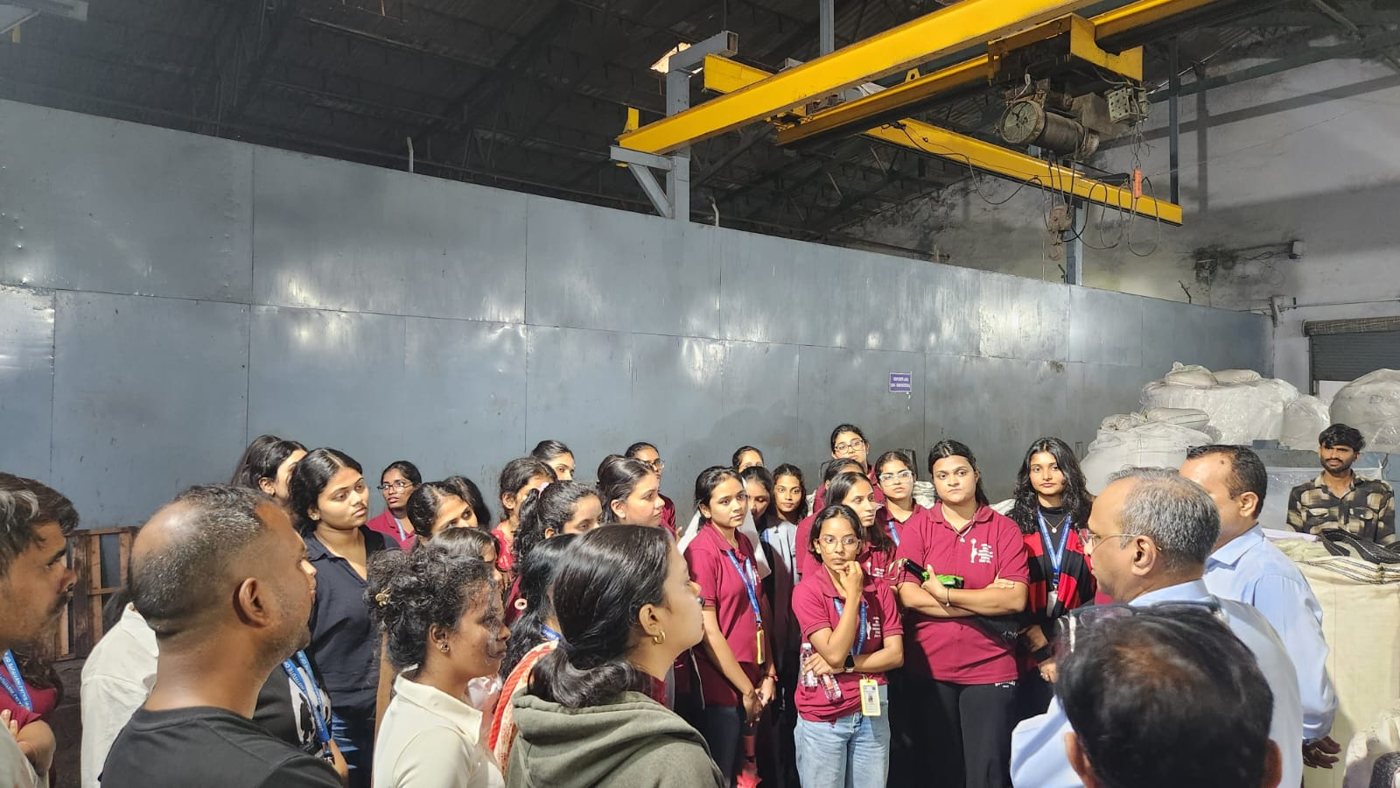
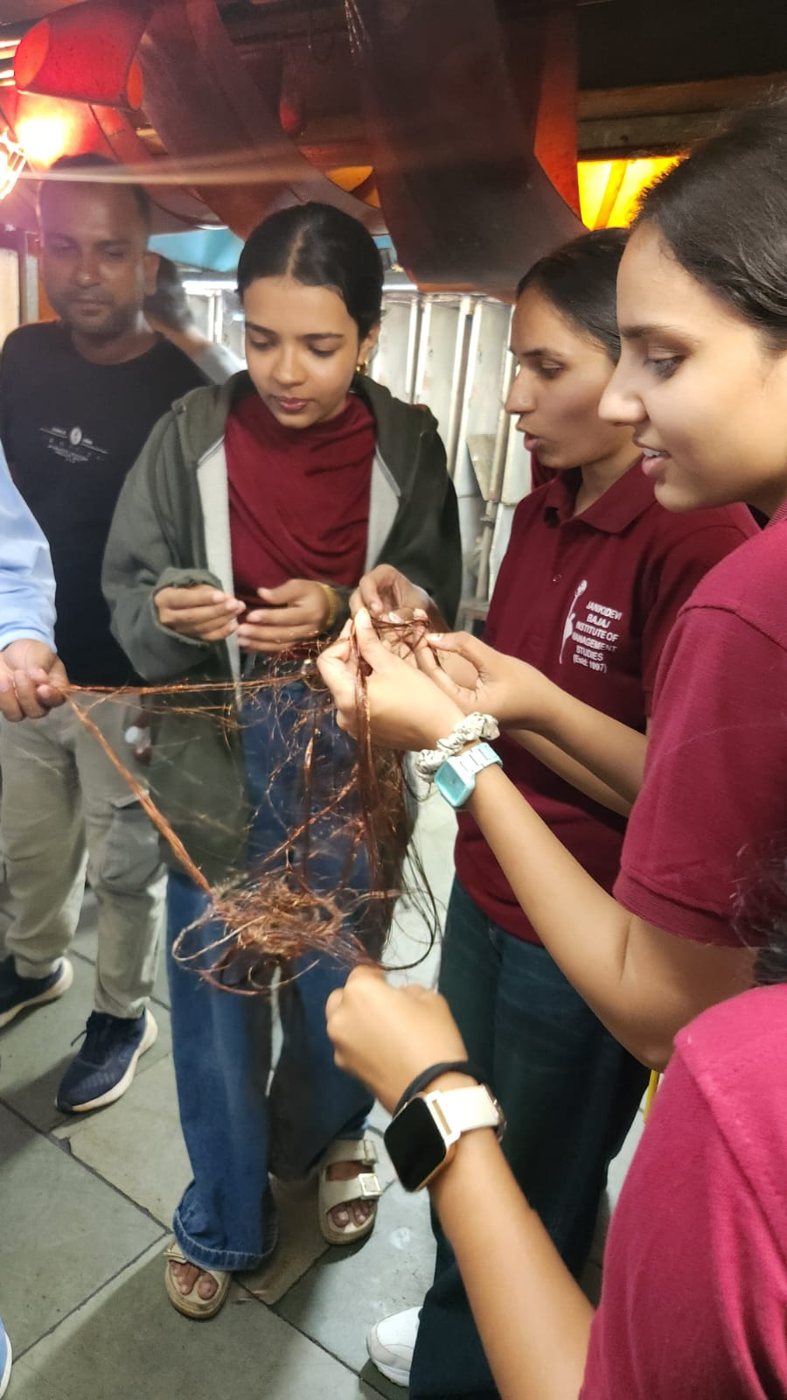
The visit to Filatext provided students with practical exposure to the functioning of a thread and textile manufacturing environment. The visit helped students understand how raw materials, machinery, employees, quality standards and process discipline work together to ensure consistent production. The students were able to observe the organised handling of thread and fibre materials and gain a better understanding of the importance of precision and consistency in textile manufacturing.
Understanding of Textile Manufacturing Processes
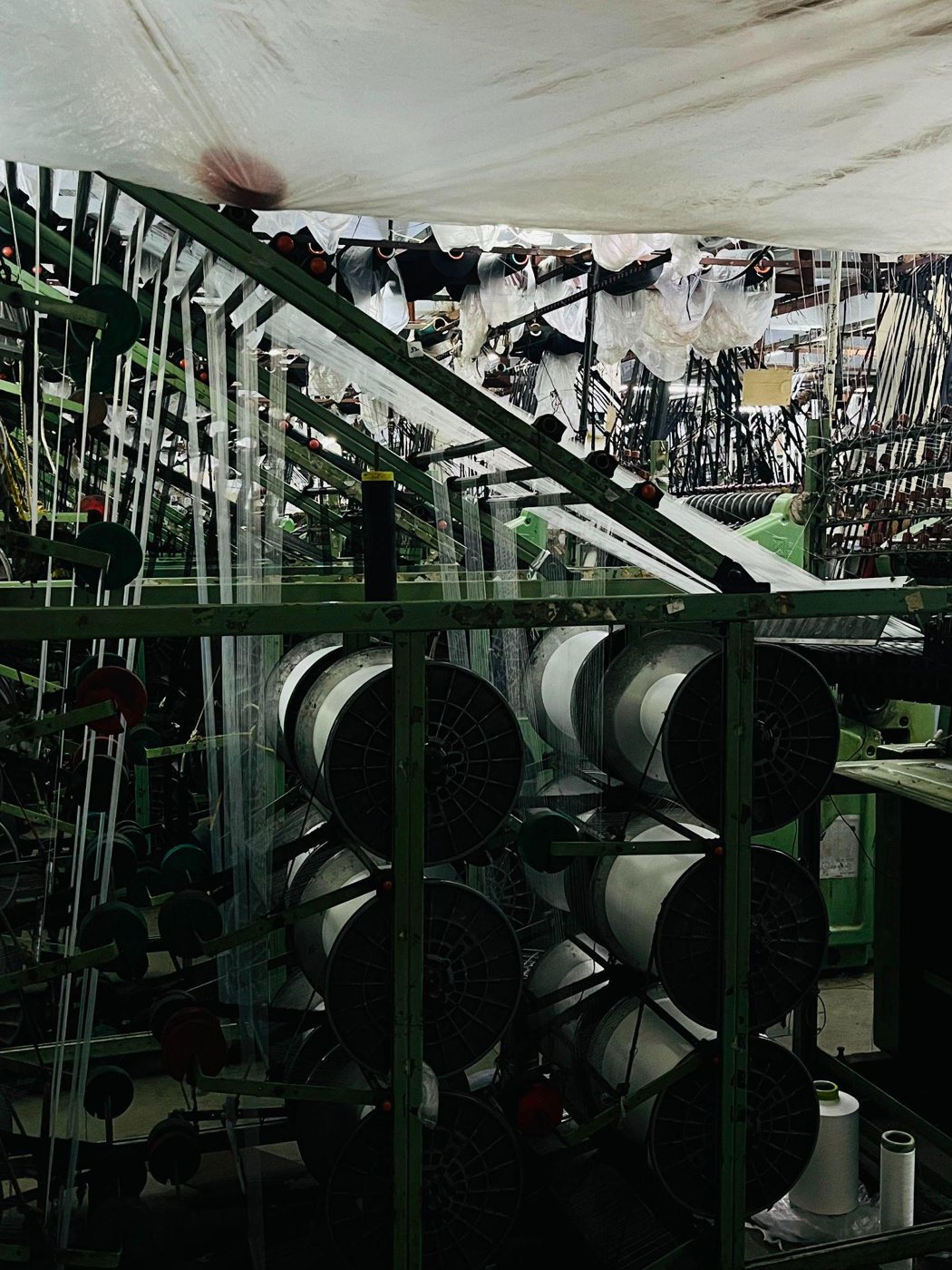
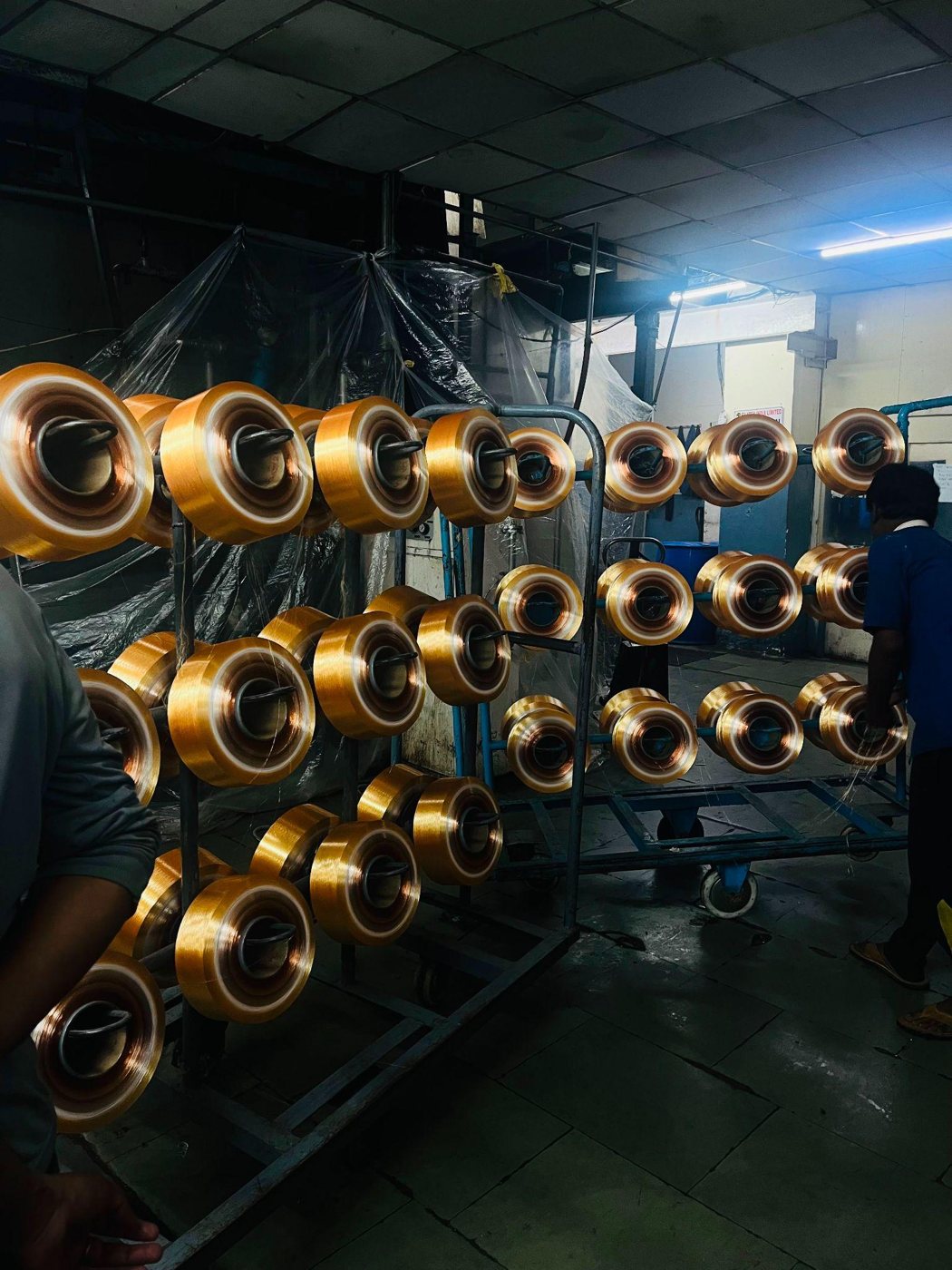
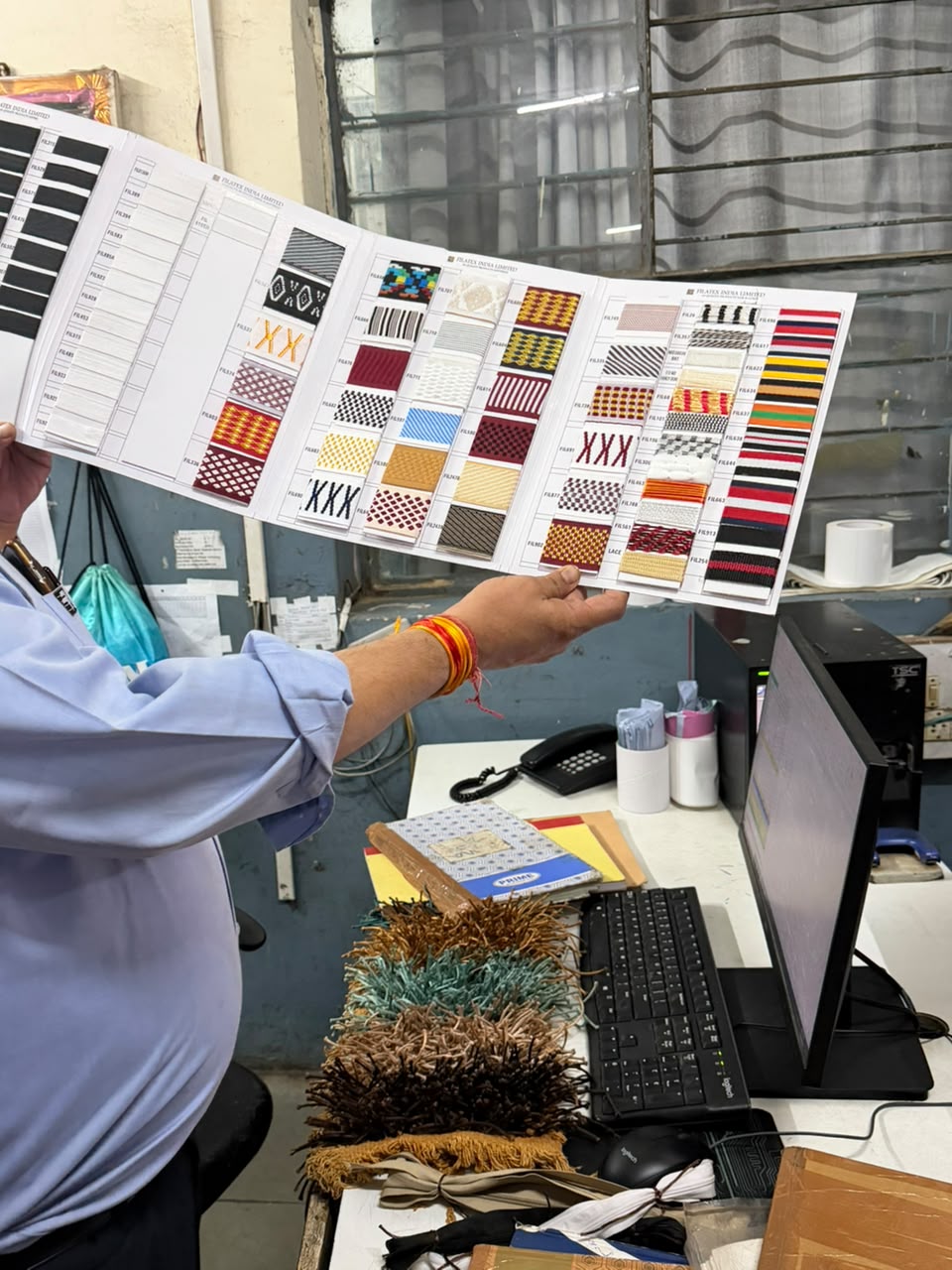
During the visit, students observed different thread, fibre and yarn-related materials used in the manufacturing process. The organised arrangement of yarn/thread packages helped students understand the importance of systematic material handling and storage within an industrial setup. The visit provided a practical perspective on how materials move through a manufacturing environment and how proper organisation supports smooth workflow and productivity.
Students also observed colour-reference cards and other colour-related materials, highlighting the importance of colour selection and standardisation in textile production. Consistency in colour is particularly important because variations can influence the appearance, quality and acceptance of the final textile product. This helped students understand how even seemingly small production details can have an impact on the overall product outcome.
Quality and Standardisation
A major learning from the Filatext visit was the importance of quality consistency and standardisation. Students understood that the quality of thread and fibre materials needs to be maintained throughout the production process. Consistent materials and systematic processes contribute to uniformity in the final product and help organisations meet customer expectations.
The visit also demonstrated the importance of process control and attention to detail. In textile manufacturing, variations in material quality, colour or processing can affect downstream applications. Therefore, maintaining defined standards and ensuring consistency at different stages of production are important aspects of manufacturing management.
Human Resource Perspective
From an HR perspective, the visit helped students recognise the importance of trained employees, coordination, discipline and adherence to standard operating procedures. Manufacturing operations require employees to understand machinery, materials, quality requirements and workplace safety practices.
Students observed how employee capability and attention to detail can directly influence productivity and product quality. Effective coordination between employees and different operational activities is therefore essential for maintaining smooth production and achieving organisational objectives.
Finance Perspective
The visit also enabled Finance students to relate manufacturing activities to resource utilisation and cost management. Materials, machinery, employee effort, storage and quality control all involve organisational resources. Efficient utilisation of these resources is important for controlling operational costs and maintaining productivity.
Students could therefore understand that manufacturing efficiency is not limited to production output but also has financial implications. Proper material handling, reduction of wastage and consistent quality can contribute to better utilisation of organisational resources.
Marketing Perspective
From a Marketing perspective, students understood the connection between product quality, consistency and customer expectations. In textile-related products, factors such as colour accuracy, material quality and consistency can influence customer acceptance and the perceived value of the final product.
The visit helped students appreciate that marketing is closely connected with production and quality. What is promised to the customer must be supported by consistent product quality and reliable manufacturing processes.
Overall Learning from Filatext
Overall, the Filatext visit gave students a practical understanding of how people, materials, machinery, quality standards and processes function together in a manufacturing organisation. It strengthened their understanding of quality management, process discipline, standardisation, employee coordination and customer-oriented production. The experience also demonstrated the interdependence of Finance, HR and Marketing functions in achieving efficient and sustainable organisational performance
Key Learnings and Outcomes
The industrial visit provided students with valuable practical exposure and helped strengthen their understanding of:
- Manufacturing processes and industrial workflow.
- The importance of quality control and standardisation.
- Workplace safety and disciplined working practices.
- Employee training, teamwork and communication.
- Inventory and material management.
- Efficient utilisation of financial and physical resources.
- The relationship between production, quality and customer expectations.
- The role of technology in supporting industrial operations.
- Cross-functional coordination between Finance, HR, Marketing, Production and other departments.
- The importance of productivity from both operational and financial perspectives.
The visit also helped students understand that industrial performance is not dependent on production alone. It requires effective coordination between people, processes, technology, quality systems and customer requirements.
Conclusion
The industrial visit to Dabur India Limited and Filatext, Silvassa was a valuable experiential learning opportunity for the 33 participating students. Exposure to two different manufacturing environments helped students gain a practical understanding of production systems, quality practices, material management, employee roles and cross-functional coordination.
The visit successfully complemented classroom learning by allowing students to observe how concepts from Finance, Human Resources and Marketing are applied in actual industrial settings. It also enhanced their professional awareness, teamwork, discipline and understanding of workplace practices.
Acknowledgement
Jankidevi Bajaj Institute of Management Studies sincerely thanks Dabur India Limited and Filatext for providing the students with an opportunity to gain valuable industrial exposure.
The institute expresses its gratitude to Prof. Dr. Mahesh V. Shitole, Director, for his guidance and support, and to Ms.Daanya , Ms.Hema Ma’am and the College Staff for their coordination, supervision and support throughout the industrial visit.
The institute also appreciates the participation and cooperation of all the students who contributed to making the industrial visit a meaningful and enriching learning experience.